The ERP Solution for the Year” 2025 in Agtech Breakthrough Awards 2025


Are your high-yield systems future-proofing global supply chains and securing your market position? As agribusiness leaders, your strategic decisions must account for the dual pressures of a rapidly increasing global population and finite arable land. Simply put, the demand for food is escalating, requiring every hectare of cultivated land to deliver maximum output.
To understand the scale of this opportunity, consider that the global Agriculture Market was valued at $12.12 trillion in 2024 and is projected to grow at a Compound Annual Growth Rate (CAGR) of 6.6% through 2029. This massive growth validates the continued requirement for highly productive systems to capture market share and fulfill consumer needs.
To compete successfully in this dynamic environment, you must have a clear understanding of what is intensive agriculture, the strategic roadmap for successful intensive farming practices, and how modern technology transforms risk into resilience for profitable intensive commercial agriculture. In this blog, we’ll highlight the importance of intensive agriculture and how to master high-yield investment systems and secure the future of your operations.
What is Intensive Agriculture?
If you are operating in a region where land is expensive or scarce, the strategic imperative guiding your operations should be what is intensive agriculture.
Intensive agriculture is the disciplined farming practice that maximizes output from a restricted land area through exceptionally high inputs of capital, technology, and specialized resources. This approach often focuses on smaller plots of land but yields a high output, making it the strategic default for regions with high population densities and limited available farmland.
Intensive Vs Extensive Agriculture
The choice between an intensive system and its counterpart, extensive farming, is a fundamental strategic decision based on the available resources and their associated costs. Where arable land is the most critical and expensive asset, high capital investment in an intensive system is easily justified because it maximizes the return on that limited resource.
This approach demands meticulous financial modeling to ensure the increased revenue generated by higher yields successfully offsets the higher production costs, thereby proving the model’s true economic viability.
The table below summarizes major differences between intensive and extensive farming and what are the implications for agribusiness leaders.
| Metric | Intensive Agriculture | Extensive Agriculture | Strategic Implication for Agribusiness |
| Land Area | Small to Medium Plots | Large Areas | Intensive maximizes output where land acquisition is difficult or expensive. |
| Input Levels (Capital/Labor) | High (Fertilizers, Technology, Labor per Unit Area) | Low (Minimal inputs per unit area) | Requires high CapEx but offers higher profitability potential via yield. |
| Yield per Hectare | Very High | Low | Secures the necessary food supply and justifies high capital investment. |
| Focus | Efficiency, Profitability, High-Value/Intensive Crops | Volume, Low Overhead Costs, Staples | The core strategic choice is based on market access, land cost, and profit margins. |
Core Intensive Farming Practices
Intensive farming practices rely on several key components and techniques to drive productivity and maximize returns from limited land resources. To maintain the efficiency and profitability required in intensive commercial agriculture, your operations must adhere to a set of systematic, high-input practices:
1. Monocropping with Rotation
Your strategic approach often starts with monoculture, the cultivation of a single intensive crop species (such as corn, wheat, or soybeans) over large, specialized production areas. This specialization is crucial for simplifying management, optimizing harvesting schedules, and achieving the economies of scale necessary for higher profitability.
To counter the inherent risks of soil depletion and pest pressure associated with this model, the practice must be combined with sophisticated crop rotation plans, which are vital for maintaining soil health and fertility long-term.
2. High-Yield Varieties (HYVs)
Investment in seed technology is paramount. HYVs, genetically modified or hybrid seeds, are engineered for rapid growth, superior output, and robust resistance to common pests or diseases. This targeted investment is fundamental to securing maximum output and ensuring the high yields per hectare that define intensive cultivation.
3. Precise Irrigation
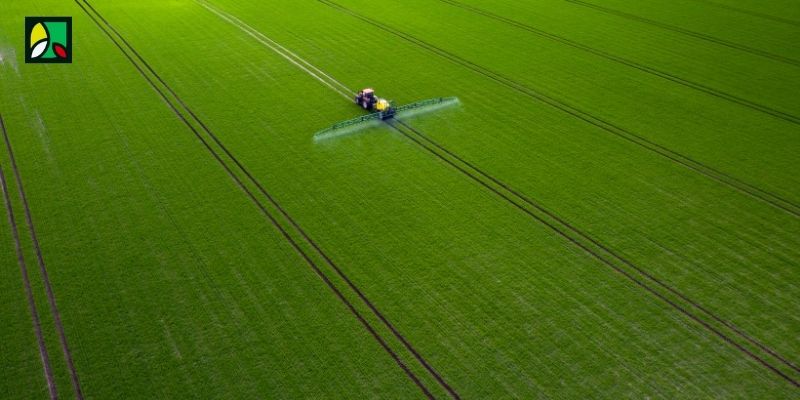
In high-yield systems, water cannot be managed casually. Investment in advanced systems, such as drip, center-pivot, or precision sprinklers, is necessary to deliver water efficiently and prevent waste.
This ensures that your intensive crops receive optimal moisture at every stage of growth, which is critical for maximizing crop water use efficiency and ensuring operational resilience, especially in arid or water-scarce environments.
4. Mechanization & Automation
Extensive mechanization represents a major initial capital expenditure (CapEx) but is essential for reducing manual labor dependencies and increasing the speed of critical field operations.
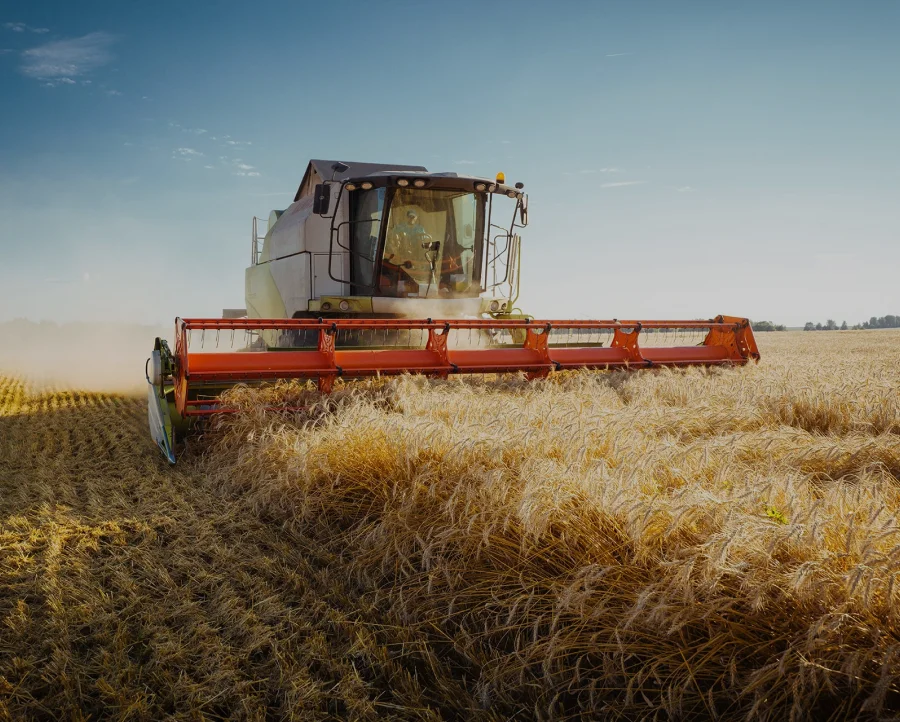
The use of modern tractors, combine harvesters, and increasingly, robotic planters and drones, allows your operation to perform tasks faster and with greater precision, accelerating planting and harvesting cycles to maximize overall efficiency. This technology also shifts labor from manual field work toward other productivity-boosting tasks.
5. Chemical Inputs
The application of fertilizers, pesticides, and herbicides is a defining feature of intensive agricultural practices, supporting continuous, high-output production. Fertilizers replenish nutrients depleted by rapid cultivation cycles, while targeted pesticides protect your investment from pests and weeds.
Agribusiness leaders must recognize that high production risk exists when relying on monoculture, requiring continuous, high-level investment in proactive risk mitigation against pest resistance, which can quickly become a continuous operational challenge.
The most effective strategy here is Integrated Pest Management (IPM), which uses cultural, biological, and chemical controls to sustain the long-term viability of your operations.
6. Data-Driven Management
The evolution of intensive farming is driven by data. The shift moves away from indiscriminate, blanket application toward data-driven, optimized resource management. This involves collecting real-time soil, crop, and weather data via sensors and satellite imagery, then using analytics to fine-tune inputs.
This transition to precision agriculture reduces waste and transforms high, volatile input costs into optimized, controlled costs, thereby strengthening financial risk management. This is evidenced by the global Agriculture Analytics market, which is projected to grow at a significant Compound Annual Growth Rate (CAGR) of 14.4% through 2030, demonstrating the accelerated investment in data-driven farm solutions.
ERP Systems as the Backbone of Intensive Cultivation
Traditional intensive cultivation often suffers from a lack of centralized control over input deployment, leading to significant waste and high, volatile operating costs. Enterprise Resource Planning (ERP) systems act as the unified operating system necessary to manage the complexity of high-yield farms.
An ERP platform manages crucial components like detailed inventory tracking, seed tender management, and precise fertilizer and pesticide monitoring. By integrating Internet of Things (IoT) sensor data and processing it through predictive analytics, the ERP system enables precision agriculture, transforming high, volatile input costs into optimized, controlled costs.
This technological integration is essential for strengthening financial risk management and ensuring the long-term profitability of your high-yield assets.
The table below shows the investment roadmap for operational excellence in intensive farming.
| Intensive Farming Practice | Strategic Objective | Technology/Input Investment | Executive Risk Mitigation |
| Resource Optimization | Maximizing output while minimizing waste (water, nutrients). | Precision Irrigation (Drip), Soil Testing Capabilities, IoT Sensors. | Reduces water depletion and regulatory scrutiny over chemical runoff. |
| Soil Health Management | Ensuring long-term land productivity and viability. | Bio-Intensive Methods, Crop Rotation Planning Software (via ERP). | Prevents critical soil degradation and reduces dependence on escalating chemical inputs. |
| Pest and Disease Control | Maintaining yield stability across large monocultures. | Integrated Pest Management (IPM), High-Yield Varieties (HYVs). | Minimizes pest resistance (a major operational challenge) and sustains long-term effectiveness of control measures. |
| Data and Operations Visibility | Enabling predictive analytics and unified management. | Enterprise Resource Planning (ERP) Systems, Data Analytics Tools. | Optimizes supply chain, streamlines procurement, and transforms variable risks into manageable financial risks. |
Conclusion
Leading agribusinesses know they need to grow more with less. Intensive farming offers one path: by harnessing the latest agritech and management practices, you can drive up your yields and stay competitive. Modern agribusiness software like AgriERP is designed for high-yield operations.
AgriERP helps you plan and track inputs, manage crop cycles, and ensure compliance with safety and sustainability standards. It provides real-time analytics and traceability so you always know what’s happening on your farm.
Explore AgriERP today to discover how our tailored solutions empower leaders like you to scale intensive agriculture profitably and sustainably.